Home
The Erlangen biophysics group studies the fundamental mechanical properties of cells, tissues, and complex soft matter. We strive to understand how cells respond to their mechanical environment, how they interact with their extracellular matrix and with neighboring cells, and what mechanisms they employ for transmigration, invasion, adhesion, contraction, and cell division. We also study the collective behavior of cells in engineered microtissue such as muscle or tumor organoids. Finally, we are interested in collective behavior in animals, in particular penguins. To address these questions, our laboratory collaborates with other research groups worldwide to develop new technologies that draw from various fields, including soft matter physics, molecular cell biology, biochemistry, engineering, and applied mathematics.
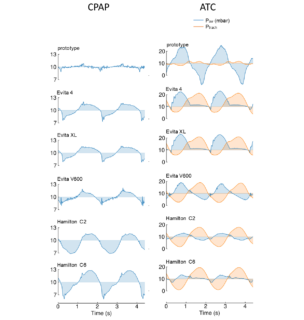
Modern intensive-care ventilators are designed to maintain a constant airway pressure when patients breathe spontaneously. Our new study shows that they often fail to do so.
We tested five commercial ICU ventilators using an active lung simulator. During conventional CPAP, their inspiratory and ...
In mechanically ventilated patients, airway pressure (Paw) is measured at the ventilator, but the pressure that actually reaches the patient is the tracheal pressure (Ptrach). The two can differ substantially because the endotracheal tube has a very high flow resistance, comparable to the airway re...
Our paper “Prediction and prevention of ventilation impairments during bronchoscopy” has been published in ICMx https://rdcu.be/eU6zF
The key findings:
-Inserting a bronchoscope causes the resistance of an endotracheal tube to increase dramatically, scaling with the negative fifth power of th...
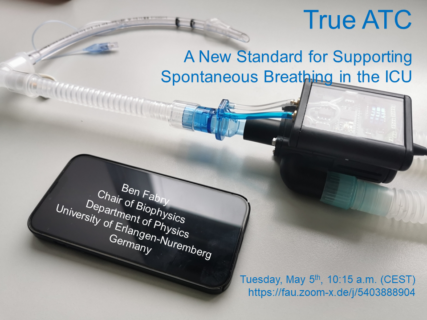
Invitation to join Ben Fabry's seminar talk on the limits of modern ventilator and recent breakthroughs in the development of ventilator-supported spontaneous breathing of ICU patients.
The talk takes place on Tuesday, May 5th, 10:15 am (CEST) in the Lecture Hall of the Zentrum für Medizinische ...
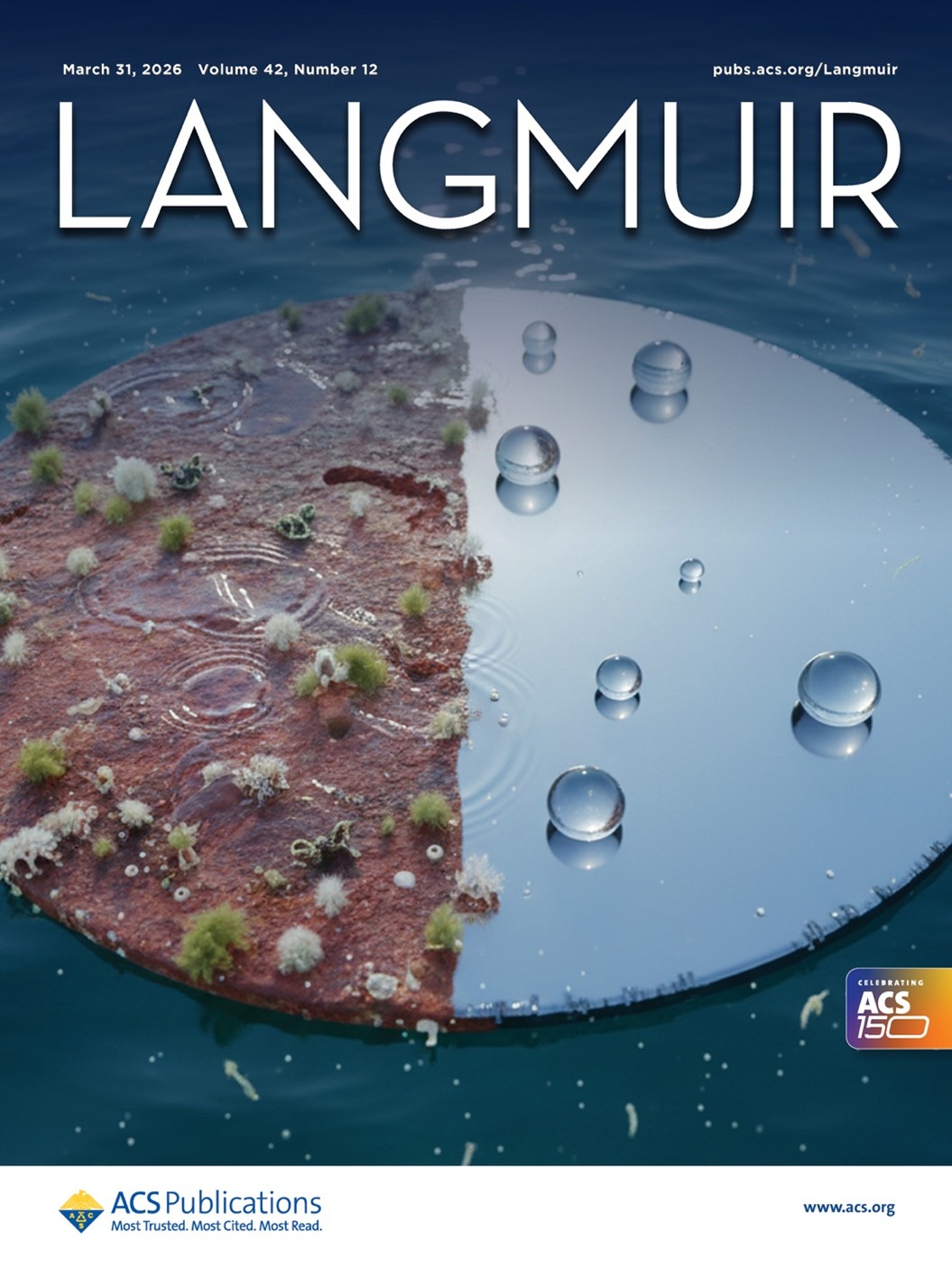
Quantifying the solid–liquid area fraction on Cassie–Baxter superhydrophobic surfaces is essential, as it dictates droplet adhesion. Mastering this interface enables the strategic optimization of surface wettability. Such insights are fundamental for engineering high-performance, durable materials ...